Blog · 6 October 2026 · 3 min read
UAE e-invoicing in 2027: what custom and legacy software has to do
الفوترة الإلكترونية في الإمارات ٢٠٢٧: ما الذي يجب على الأنظمة المخصصة فعله
The dates, the format (PINT-AE), the accredited-provider model, and the honest options if your invoices come out of Oracle, a custom PHP system or an in-house ERP.
AMBy Asad Malik — founder, Silaflux
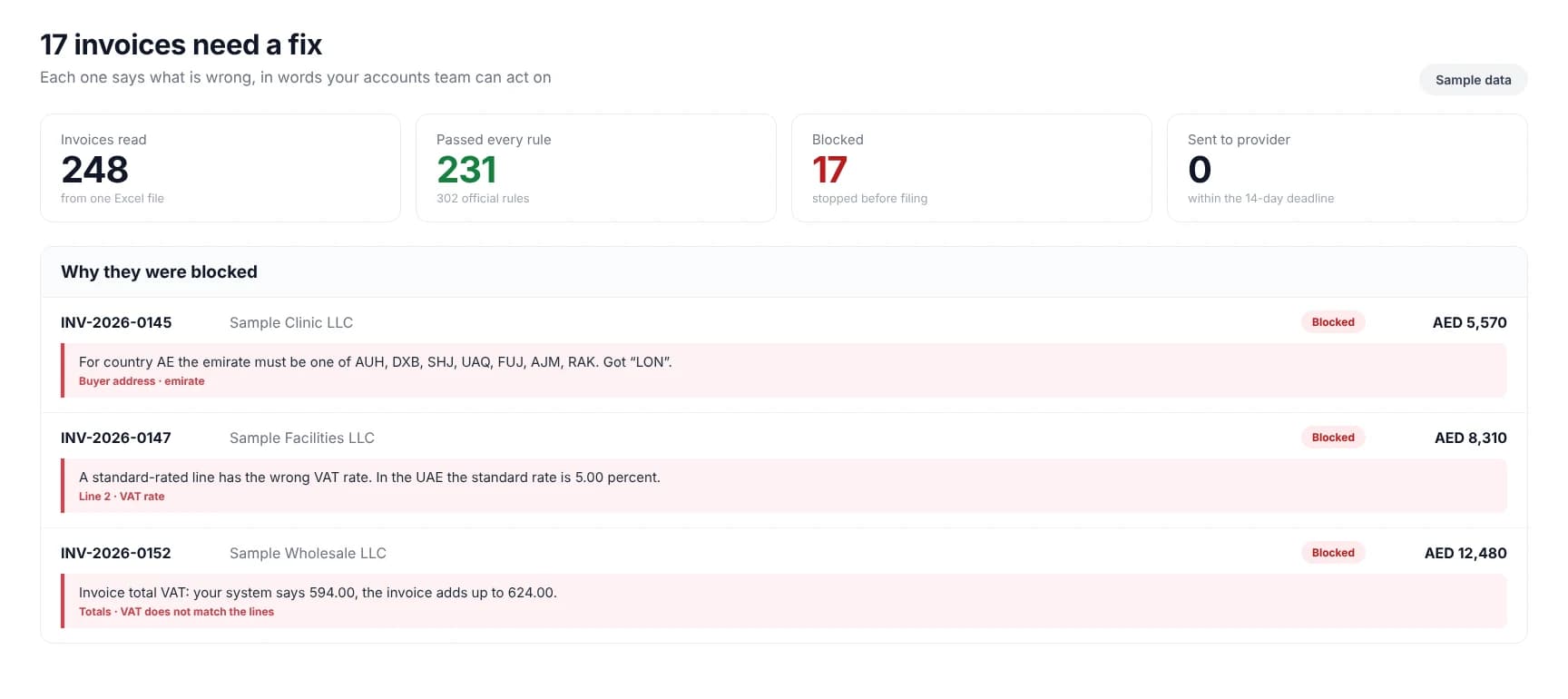
If your invoices are produced by software that was written for you — an Oracle Forms ERP, a custom PHP or .NET system, an in-house tool — then the UAE e-invoicing mandate is your problem to solve, not your vendor's. This post is the plain version of what that means.
The dates that matter
For businesses with annual revenue under AED 50 million, the Ministry of Finance timeline is: appoint an accredited service provider (ASP) by 31 March 2027, and go live with e-invoicing on 1 July 2027. Larger businesses are earlier. Check the current dates on the Ministry of Finance e-invoicing page before you plan — they are the source, not this post.
What "e-invoicing" actually is here
It is not a PDF emailed to the customer. The UAE model is a five-corner (Peppol-style) network: your system → your accredited service provider → the buyer's provider → the buyer's system, with the tax authority receiving the data in the middle. The invoice travels as structured data in the PINT-AE format — a UAE profile of the international Peppol invoice standard — not as a document.
So the questions for custom software are: can it produce a valid PINT-AE invoice, can it send it to an ASP's API, and can it store the response (status, UUID, errors) back against the invoice?
Three honest options
1. Replace the system
Move to software that ships compliant. Right for some; for a group running a 15-year-old ERP with every business rule baked in, it is a two-year project dressed up as a compliance fix.
2. Get the vendor to add it
If the original developers still exist and still have the source, this is the clean path. Ask them two things: which ASP they have tested against, and whether validation happens before submission.
3. Put a connector beside the system
Leave the ERP alone. A connector reads each finalised invoice (database, API or export), maps it to PINT-AE, validates it against the specification, submits through the ASP you chose, and writes the result back. The ERP does not know e-invoicing exists; the connector does. This is what Rabt is.
Where mapping goes wrong
- Tax categories. Standard 5%, zero-rated and exempt lines must be tagged correctly per line, not per invoice. Mixed invoices are where custom systems usually have no field for it.
- Buyer identification. TRN and address fields have to be present and formatted; "walk-in customer" needs a defined treatment.
- Credit notes and corrections. The mandate expects a reference to the original invoice. Many legacy systems issue a negative invoice instead.
- Rounding. Line totals, tax totals and the document total must reconcile exactly. Two-decimal rounding done per line versus per document is the classic failure.
A practical sequence for the next months
- List every system that issues an invoice in your group — including the ones that only do it "sometimes".
- For each, decide: replace, vendor update, or connector.
- Shortlist two ASPs and ask for sandbox access. Appoint before 31 March 2027.
- Run a validation pass on last month's real invoices before writing any integration — it tells you exactly which fields are missing.
- Go live on a copy first; switch production only when every invoice from the test month validates.
If you want the validation pass done on your actual invoices, that is a short, fixed-price job and the fastest way to know where you stand. Book a call.